
| Titre de la revue Canadian Eye Care Today. |
| Périodicité de la publication 3 fois par année |
| DOI 10.58931/cect |
Archives
-
Volume 5, Issue 1, Spring 2026
- Congenital Hypertrophy of the Retinal Pigment Epithelium: Following the Bear Tracks
- Premium Intraocular Lenses: A Framework for Patient Selection and Expectation Management
- Updates in the Management of Thyroid Eye Disease
- My Experience in Advocacy for Eye Care
- Cataract Surgery in Uveitis‑Associated Cataract: A Clinical Review
-
Volume 4, Issue 2, Summer 2025
- Adverse Events Associated With Novel Cancer Therapies
- Integrating Virtual Reality Visual Perimetry Into Clinical Practice: A Review of Devices, Applications, and Limitations
- Approach to The Patient With Hypertensive Uveitis and Uveitic Glaucoma
- Unmasking Ocular Rosacea: Diagnostic Challenges and Evolving Management
- From Peel to Plug: Sealing The Gap With Surgical Innovations For Macular Hole Repair
-
Volume 4, Issue 1, Spring 2025
- Taking a Different Point of View: The Utility of Endoscopic Vitrectomy
- Next-Generation Ophthalmology: How Artificial Intelligence Is Shaping the Future of Eye Care
- Common Side Effects With Glaucoma Medications
- The Evolution of Endothelial Therapeutics
- Surgical Pearls for Pterygium Surgery
-

Volume 3, Issue 3, Fall 2024
- Considerations for Adding Minimally/Microinvasive Glaucoma Surgery (MIGS) to a Planned Cataract Surgery
- Update on Giant Cell Arteritis: Essential Information for Ophthalmologists
- Ocular Fundus Tumours: A Simplified Clinical Classification
- Standard of Care for First-line Therapy in Newly Diagnosed Glaucoma and Update on SLT from the LiGHT Trial
- Preventing Work-related Musculoskeletal Injuries
-
Volume 3, Issue 2, Summer 2024
- Review of Nutritional Supplementation Options for the Anterior Segment: An Evidence Based Approach
- Endothelial Corneal Dystrophy
- Musculoskeletal Injuries and Ophthalmologists: Prevention Requires a System-Level Approach
- Peripheral Retinal Diseases: Indications for Prophylactic Laser Treatment versus Observation
- Challenges in the Diagnosis and Management of Anterior Blepharitis
- Pediatric Blepharokeratoconjunctivitis: An Update
-
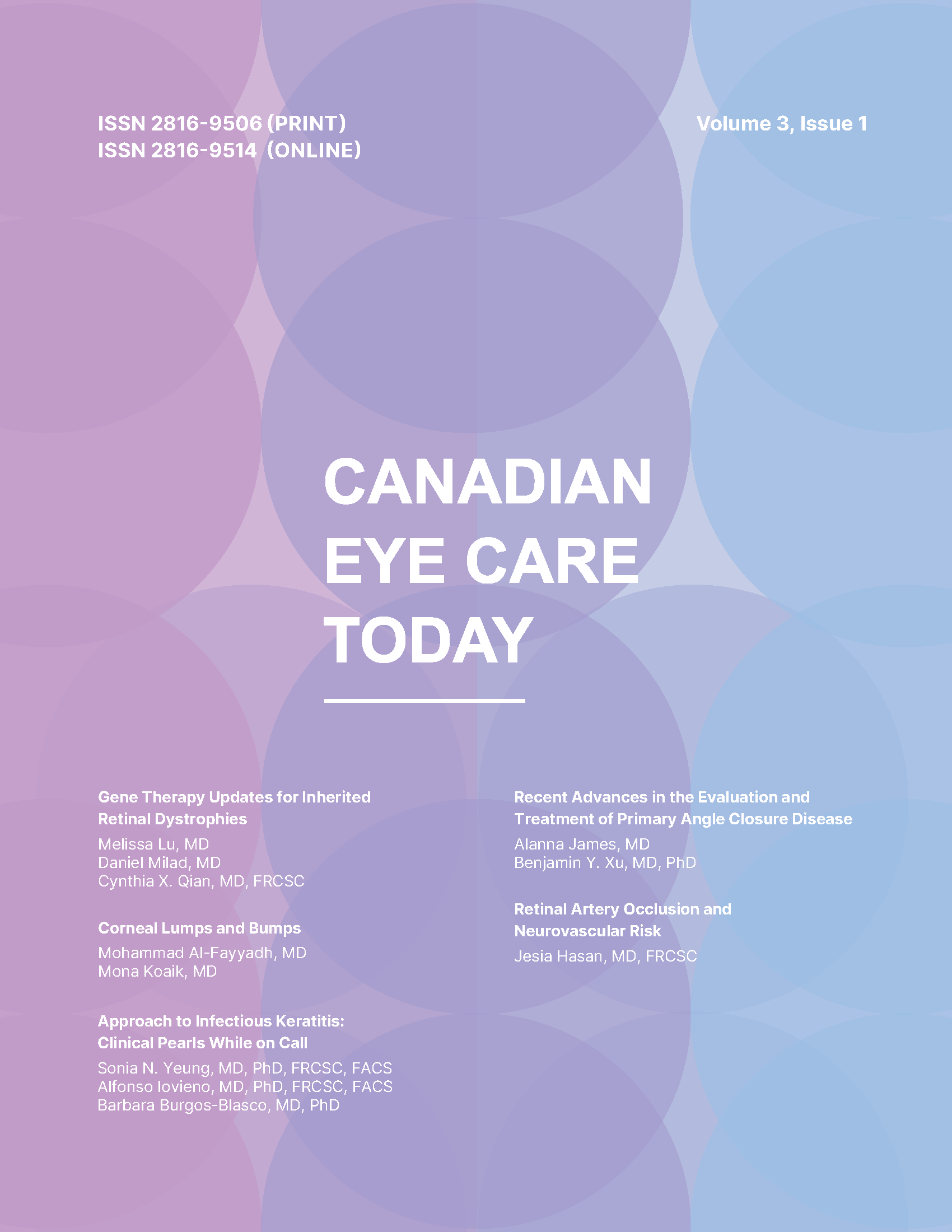
Volume 3, Issue 1, February 2024
- Gene Therapy Updates for Inherited Retinal Dystrophies
- Recent Advances in the Evaluation and Treatment of Primary Angle Closure Disease
- Corneal Lumps and Bumps
- Retinal Artery Occlusion and Neurovascular Risk
- Approach to Infectious Keratitis: Clinical Pearls While on Call
-
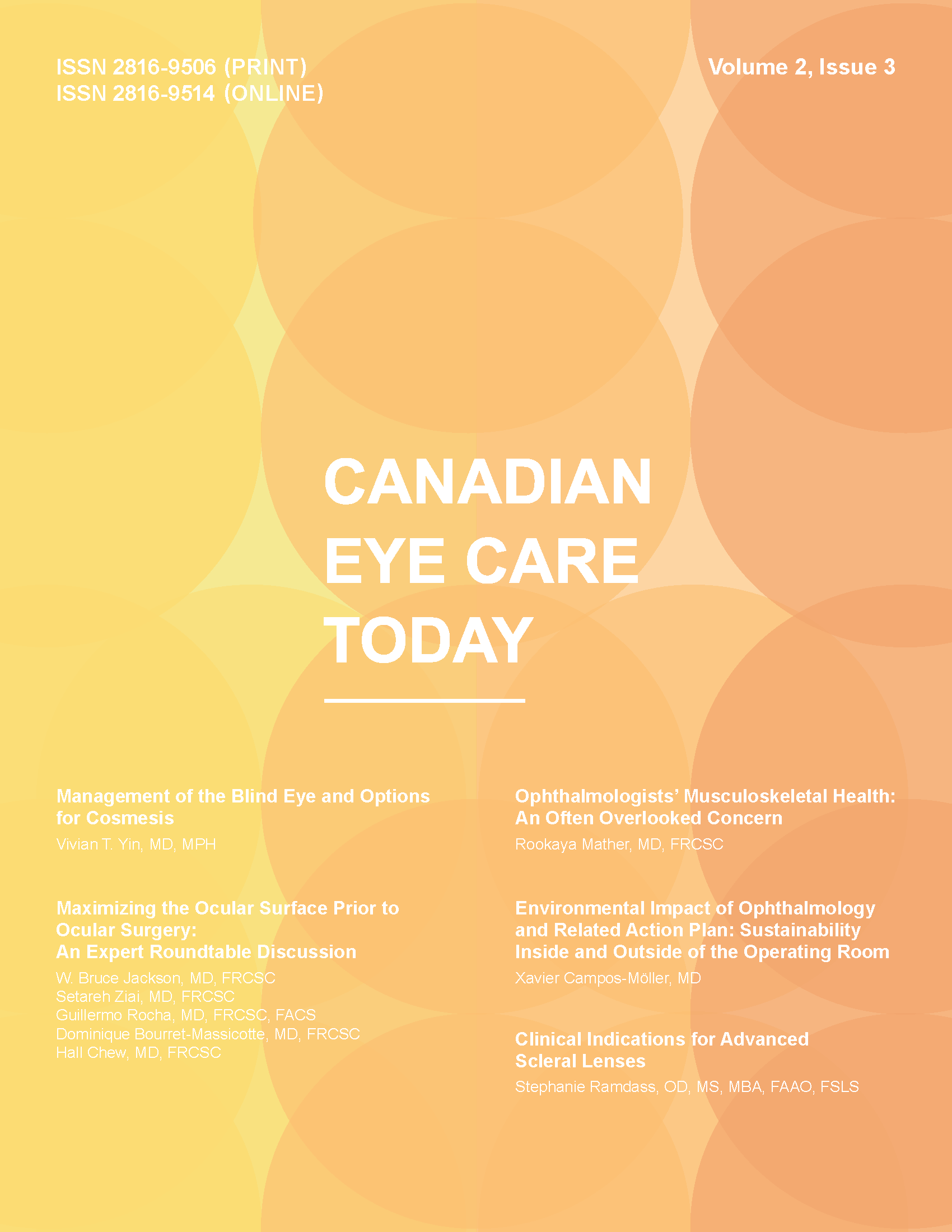
Volume 2, numéro 3, octobre 2023
- Management of the Blind Eye and Options for Cosmesis
- Ophthalmologists’ Musculoskeletal Health: An Often Overlooked Concern
- Maximizing the Ocular Surface Prior to Ocular Surgery: An Expert Roundtable Discussion
- Environmental Impact of Ophthalmology and Related Action Plan: Sustainability Inside and Outside of the Operating Room
- Clinical Indications for Advanced Scleral Lenses
-
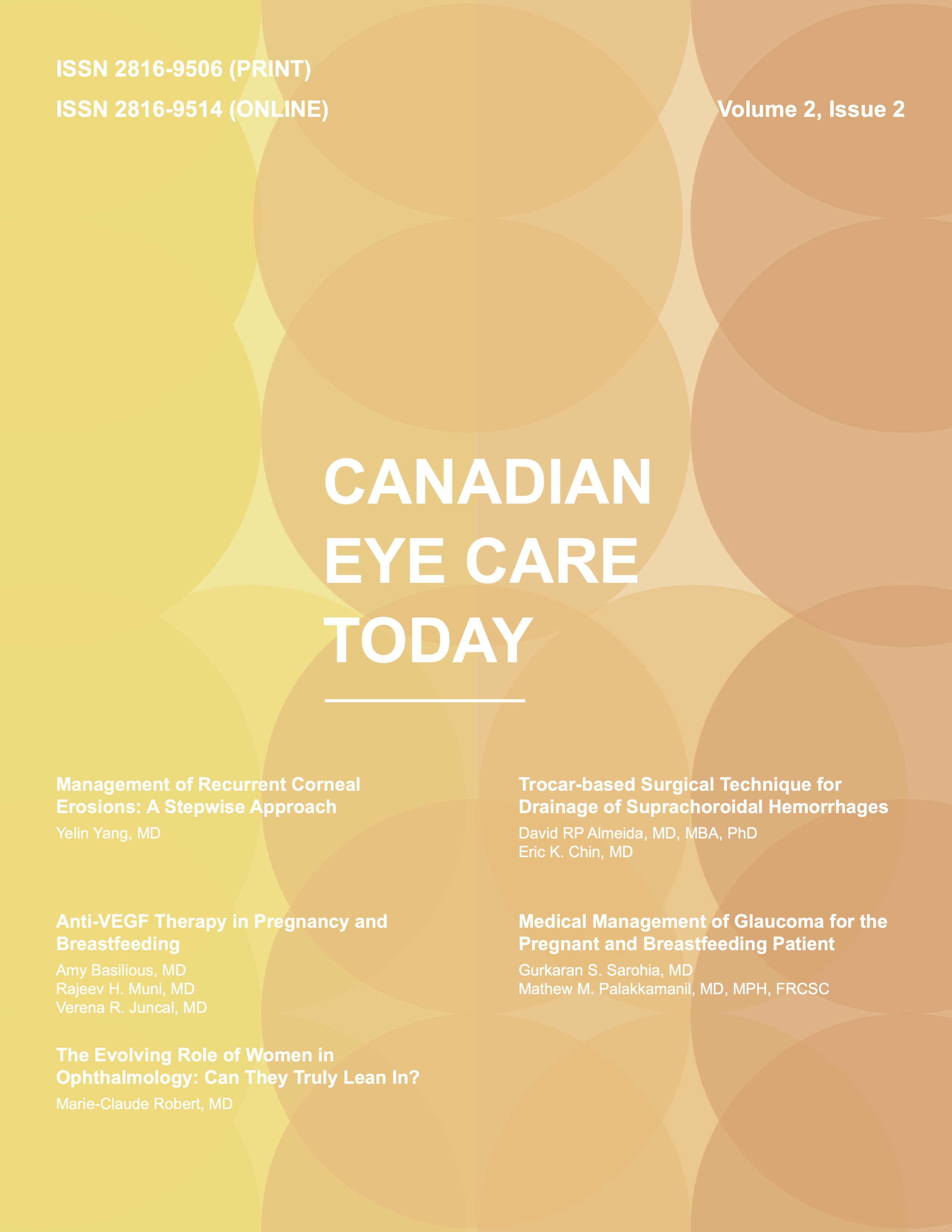
Volume 2, Issue 2, May 2023
- Management of Recurrent Corneal Erosions: A Stepwise Approach
- Trocar-Based Surgical Technique for Drainage of Suprachoroidal Hemorrhages
- Anti-VEGF Therapy in Pregnancy and Breastfeeding
- Medical Management of Glaucoma for the Pregnant and Breastfeeding Patient
- The Evolving Role of Women in Ophthalmology: Can They Truly Lean In?
-

Volume 2, numéro 1, février 2023
- Une approche pour les neuropathies optiques
- Stratégies de prise en charge des maladies de la surface oculaire dans les cas de glaucome
- La génétique de la dégénérescence rétinienne en 2023
- Prise en charge du kératocône : S’orienter parmi les options offertes aux patients
- Des médias sociaux à l’examen par les pairs : Comment déceler la désinformation et les biais dans le contenu médical?
-
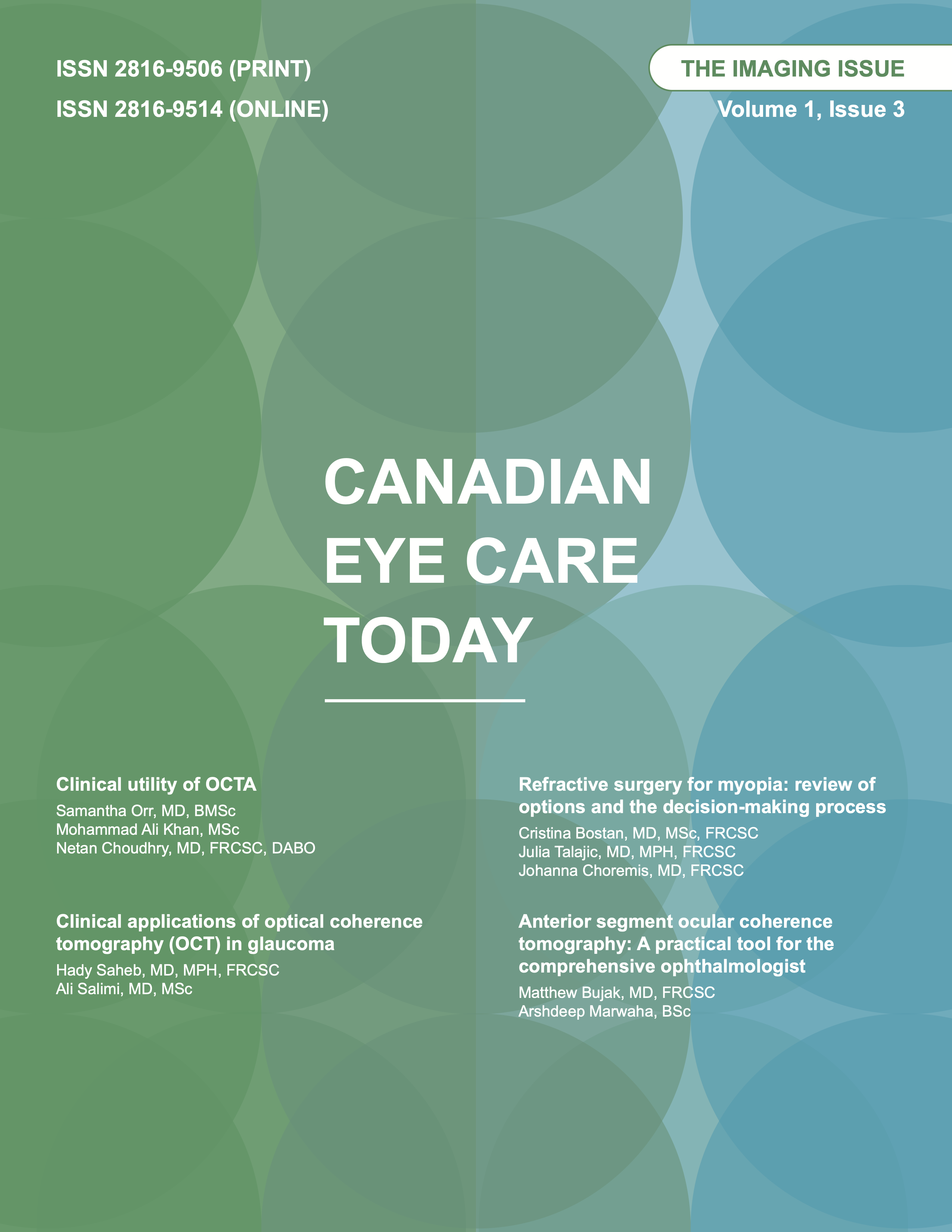
Volume 1, numéro 3, décembre 2022
- Utilité clinique de l’A-TCO
- Chirurgie réfractive de la myopie : Revue des options et du processus décisionnel
- Applications cliniques de la tomographie par cohérence optique (TCO) dans le glaucome
- Tomographie par cohérence optique du segment antérieur du globe oculaire : Un outil pratique pour le prestataire de soins ophtalmologiques complets
-

Volume 1, numéro 2, septembre 2022
- Rester au fait de la maladie de la surface oculaire induite par le dupilumab
- Uvéite post-vaccination contre la COVID-19 : Une revue de la littérature pour les ophtalmologistes Canadiens
- Maculopathie causée par le polysulfate de pentosane : Restez à l’affût de cette affection trompeuse
- Le glaucome d’origine médicamenteuse (toxique)
- Dépistage de la dépression et du risque de suicide : Un élément important des soins du glaucome
-

Volume 1, numéro 1, juin 2022
- Le rôle évolutif de la TCO dans la myopie pathologique
- Méthodes pour traiter la progression de la myopie chez les patients pédiatriques
- Repérer les différences: Les difficultés de la détection du glaucome chez le patient myope
- Chirurgie de la cataracte chez le myope : ce qu’il faut savoir
- Glaucome et myopie: Facteurs de risque, physiopathologie et traitement